


Your Plastic Litter Box Could Be Harboring Bacteria—Even After Cleaning.
Over time, scratches and grooves can develop on plastic surfaces, creating hard-to-clean areas where residue, odor and bacteria may remain. Smooth, non-porous stainless steel offers a more hygienic surface that’s easier to clean thoroughly.
Plastic vs. Stainless Steel
Compare a scratched plastic litter box with the smooth, non-porous surface of stainless steel.


Why Plastic Gets Harder to Keep Clean Over Time
It’s not always about how often you clean. Daily scooping, litter movement and normal use can gradually wear the surface.

New Plastic
The surface begins smooth.

Scratches Develop
Scooping and daily use can leave grooves.

Residue Gets Trapped
Worn areas can become harder to clean thoroughly.
The issue isn’t just what you can see—it’s how easily the surface can be cleaned.
A Smoother Surface Makes a Meaningful Difference
Compare how the two materials perform in everyday litter box use.

Bottify Insulated Bottle

Leading Brand Bottle
Surface
Smooth, non-porous steel
Can scratch with use
Odor absorption
Low
May increase as plastic wears
Leak-Proof Design


Durability
Long-lasting metal construction
May stain, scratch, or deform
Ongoing supplies
No proprietary supplies required
Usually minimal
Noise and movement
None
None
Upfront cost
Moderate
Low
Why Stainless Steel Makes Everyday Care Easier
A simple, non-porous box removes many of the places where moisture, residue, and odors can hide.

XL Space. High-Sided Protection.
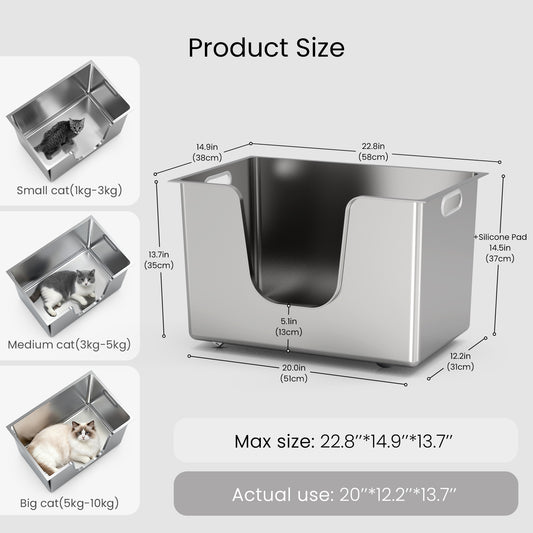
Designed with extra-high sides and spacious dimensions to give large cats more room while helping keep urine and scattered litter contained.
0‘’
Length
0lb
Weight
0‘’
Height
New In
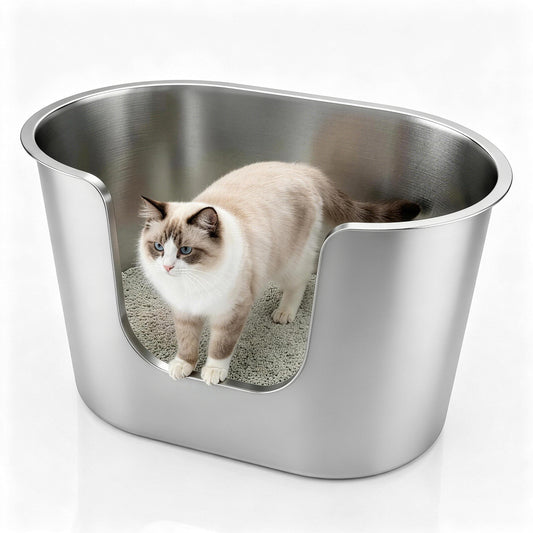
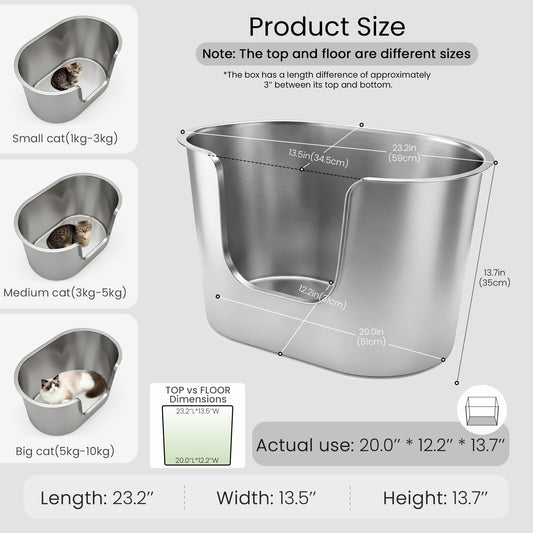
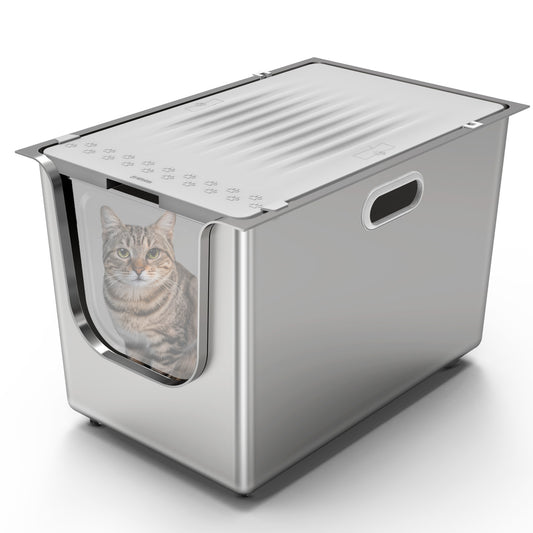
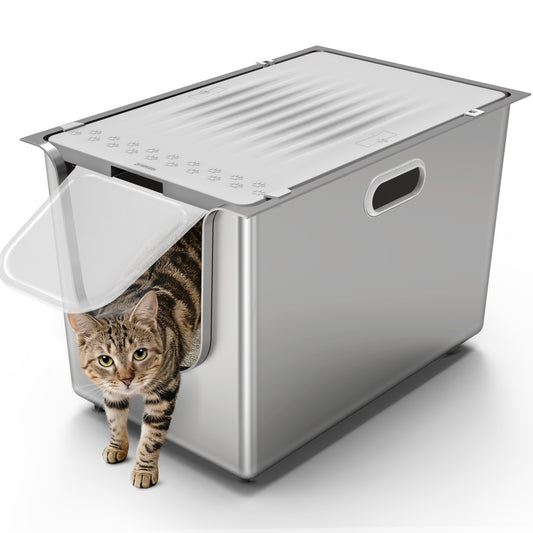
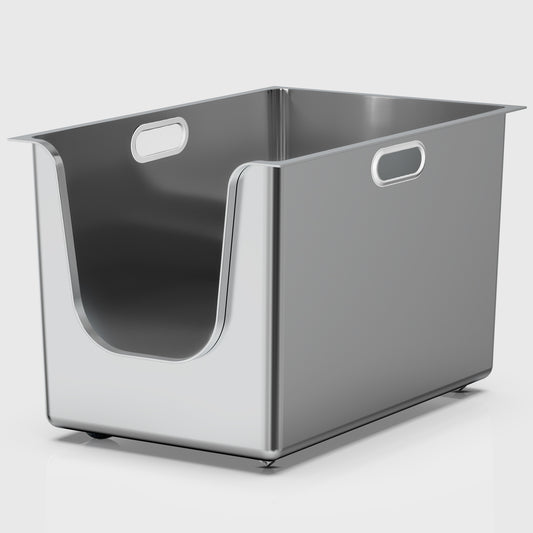
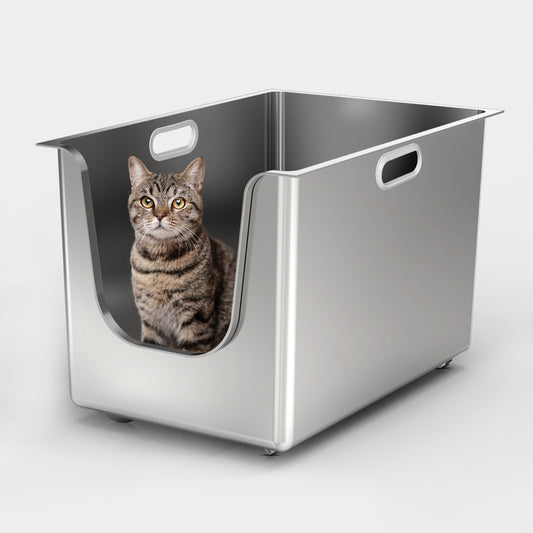
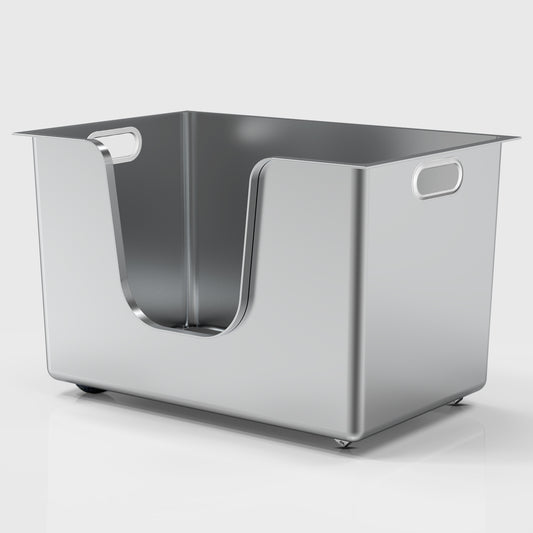
stainless Steel. A Better Fit for Real Cat Homes.
From high-peeing cats to multi-cat households, PTLOM offers stainless steel designs for different spaces, habits, and mobility needs.


Free Delivery
Complete order 72h
1-Year Warranty
Reliable coverage for one year
Online Payment
Sercure System
100% Money Back
Easy Return
Frequently Asked Questions
Learn how stainless steel compares with plastic and automatic litter boxes before making the switch.

Are stainless steel litter boxes better than plastic?
Stainless steel has a smooth, non-porous surface that resists absorbing moisture and odors better than worn or scratched plastic. It is also more resistant to staining and generally lasts longer. Plastic boxes may cost less initially, but they can become harder to clean as scratches develop.
Do stainless steel litter boxes control odor?
Stainless steel does not absorb odors as easily as scratched plastic, which helps prevent smells from becoming embedded in the box itself. However, no material can replace regular scooping, litter changes, and cleaning. Litter type, diet, ventilation, and the number of cats also affect odor.
Is a stainless steel litter box easier to clean than an automatic litter box?
A stainless steel box has a simple open basin with no motors, sensors, rotating drum, or internal waste compartment. This generally makes it easier to inspect, rinse, and dry thoroughly. Automatic boxes reduce daily scooping but still require regular emptying and detailed cleaning of their components.
Can large cats use a stainless steel litter box?
Yes, as long as the usable interior gives the cat enough room to enter, turn, dig, and squat comfortably. Large breeds such as Maine Coons should be matched by interior length and width rather than an XL label alone. Review each product’s dimensions before purchasing.
Are stainless steel litter boxes suitable for high-peeing cats?
High-sided stainless steel litter boxes can help contain urine spray from cats that stand or gradually raise their rear while urinating. Choose a wall height and entry position that match your cat’s posture. No litter box can guarantee complete containment for every cat.
More questions?